
How many restrooms does a farm operation need?
Start with headcount, then check the walk. OSHA 1928.110 requires potable water, a toilet and handwashing within a quarter mile of hand-labor employees, at a ratio of one facility per 20 workers. A 15-person crew running fence line or picking produce on a spread outside Little Rock needs one standard portable toilet staged at the field edge, not parked back at the barn. If the crew splits into two fields a half mile apart, you need two units, because the quarter-mile walk resets at each location. Larger operations with 40 or more hand-laborers should plan two units minimum and add handwashing station rental at each cluster, since 1928.110 ties water and washing to the same location as the toilet. We quote by season here, and a lot of Little Rock operations run March through November, so ask about monthly porta potty rental instead of paying day rates every time crews move. If you're not sure where to start, our how many porta potties do I need guide walks through crew size and site layout. For row crop work near College Station, 9.2 miles east of Little Rock, or hay operations toward Bryant, 13.7 miles southwest, the same quarter-mile rule applies no matter how rural the field access road gets.
What does a farm restroom rental cost?
Pricing runs by duration, and most farms save by locking in a season instead of paying daily. Below is the standard unit range, which covers the bulk of field sanitation setups.
| Duration | Low | Typical | High |
|---|---|---|---|
| Day | $100 | $150 | $350 |
| Week | $130 | $200 | $500 |
| Month | $125 | $200 | $325 |
A single unit on a month-long lease often lands near the weekly rate for a full 30 days, which is why most growers request monthly porta potty rental once planting or harvest stretches past a couple weeks. Delivery adds a separate fee, and rough field access, standing water or a long haul off the county road can push it toward the higher end of that band. If your crew works multiple fields, porta potty rental cost breaks down how delivery stacks across sites, and porta potty rental per day is worth a look for short push jobs like a weekend hay bale or a one-day spray window. For operations closer to Maumelle, 13.4 miles north, or Benton, 18.8 miles southwest, delivery routing is part of the quote, not a guess.
Where should units go on a farm site?
Set the unit on level, stable ground near the work zone, not at the end of a rutted lane the truck can't reach. A standard unit runs about 44 by 48 inches on the ground and stands roughly 92 feet... 92 inches tall, so it clears most gate openings and fits along a fence line without blocking equipment turns. Keep it out of the path of sprayers, harvesters and grain carts, and set it upwind of any area where paints, coatings, herbicides or insecticides get applied, since OSHA 1926.51(f)(1) requires washing facilities specifically for that kind of contaminant exposure. Anchor it against wind, because open fields around Little Rock catch gusts that a barn lot doesn't. If crews are spraying regularly, pair the toilet with a portable sink rental so hand washing is actually available on site, not just water in a jug. Our porta potty placement guide covers ground conditions and clearance in more detail, and for operations that also need water storage or wastewater capacity beyond a toilet, holding tank rental is worth pricing alongside it. Farms running a bunkhouse or seasonal labor camp near Sherwood, 18.3 miles northeast, or Jacksonville, 21.5 miles northeast, often add a second unit at the housing site rather than making workers walk back to the field.
Do I need a permit for a portable toilet on farmland?
Placement on private agricultural land generally doesn't trigger the same review as a public right-of-way setup, but confirm with the city before you place anything near a road frontage or shared access easement. We haven't verified a blanket exemption, so check locally. See porta potty permit requirements for the general process.
How often does a farm unit get serviced?
Standard service follows a once-a-week interval for up to 10 users over a 40 hour week, per ANSI/PSAI Z4.3. Crews of 20 or more, or units used across double shifts during harvest, usually need twice-weekly pumping. Ask about how often are porta potties cleaned for the specifics.
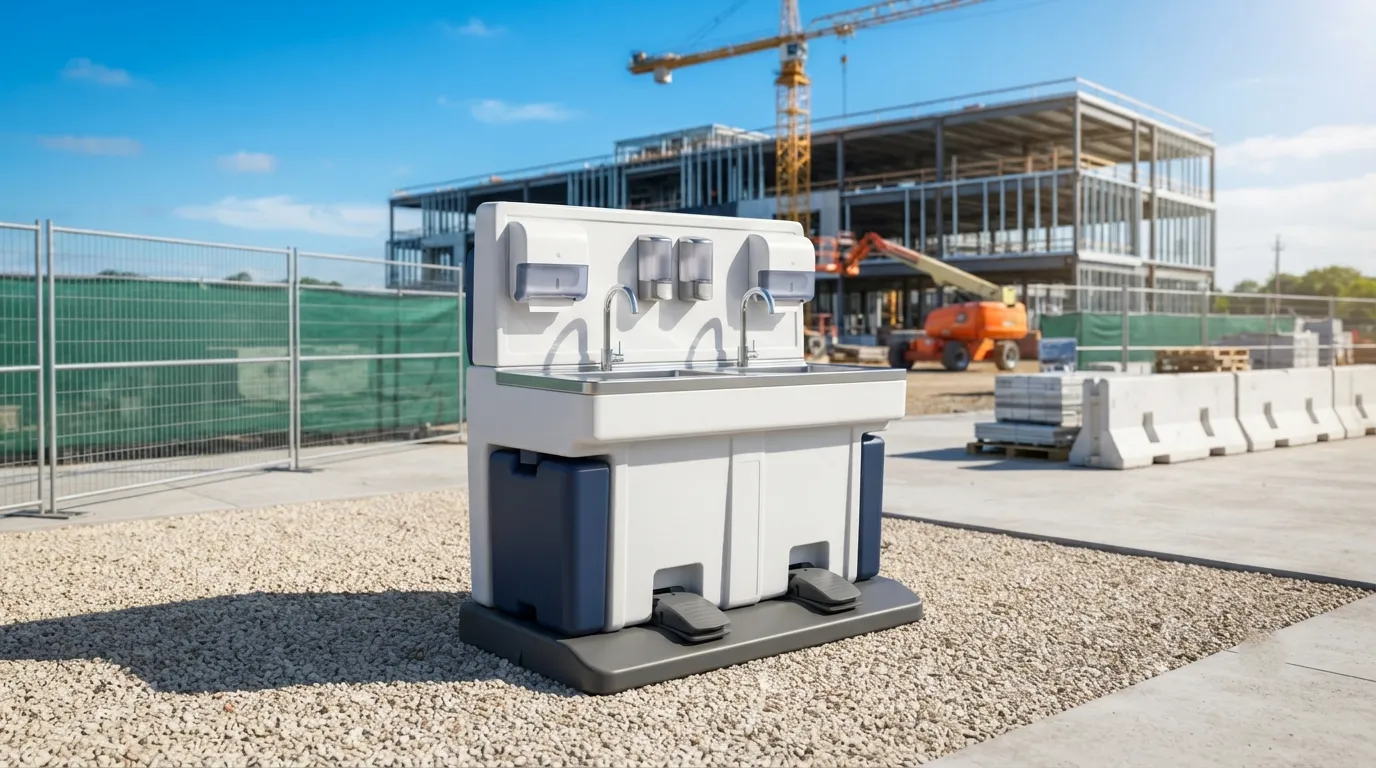
Can I get a unit with a sink for spray crews?
Yes. Pair a standard toilet with a handwashing station rental whenever crews handle paints, coatings, herbicides or insecticides, since OSHA 1926.51(f)(1) applies directly to that work. A sink alone won't satisfy the toilet requirement under 1928.110.
What happens to farm restrooms in winter?
Units still function in cold weather, but standing water lines and low temperatures change service needs. Our porta potty in winter page covers freeze prevention and servicing adjustments for Little Rock's winter stretch.
Do I need a bigger unit for a labor camp or bunkhouse?
If workers are housed on site, add units per the same OSHA 1928.110 ratio, one per 20 workers, at the housing location itself, not just the field. A deluxe flushable porta potty is worth considering for permanent camp setups.
Next step
Get a delivery date
Tell us the address, the dates and the headcount. We size the order and confirm the route.