
What handwashing stations does OSHA actually require?
The rule people misquote most is 1926.51(f)(1). It only applies where employees apply paints, coatings, herbicides or insecticides, or work around other harmful contaminants. It is not a blanket handwashing mandate for every construction site. General industry workplaces (not construction) fall under 1910.141(c)(1)(i) for toilet ratios, and 29 CFR 1910.141(d)(2) requires soap and towels or a hand-drying device wherever washing facilities exist. Hand sanitizer alone does not satisfy that rule. If your Little Rock crew is spraying finish on siding or mixing herbicide along a fence line, you need washing water on site, not just a bottle of gel. Pair a handwashing station rental with your toilets rather than treating sanitizer as a substitute. For sites that only need the gel-based option between full washing setups, a hand sanitizer station rental fills the gap, but it is a supplement, not a swap.
How many handwashing stations do I need for a Little Rock job site?
Match stations to your toilet count. OSHA 1926.51(c)(1) sets toilets at 1 for 20 workers or fewer, then 1 toilet and 1 urinal per 40 workers up to 200, and 1 per 50 beyond that. Most crews put a wash station next to each toilet bank rather than spacing them thin across the site. A 40-person road crew working near Maumelle, about 13.4 miles north of Little Rock, typically runs two toilets and two wash stations rather than one oversized cluster. If you are not sure how your headcount maps to units, the how many porta potties do I need guide walks through the math, and the OSHA portable toilet requirements page covers the ratio table in full. Farm operations fall under a different standard entirely: 1928.110 requires one facility per 20 hand-labor employees, reachable within a quarter mile walk, which matters for row-crop work outside city limits. See farm and agricultural restrooms for that setup.
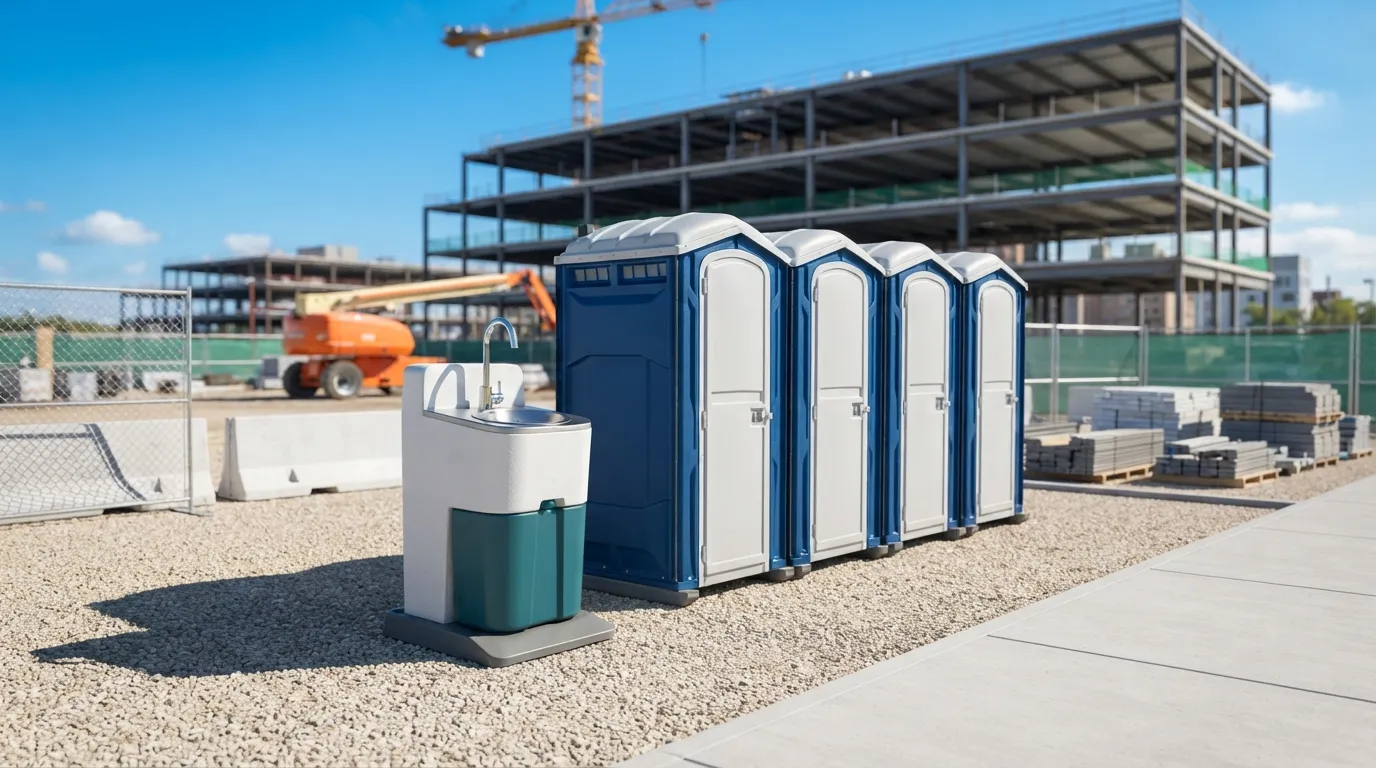
Do portable sinks meet the ADA requirements?
They can, if placed and built right. ADA Standards section 308.2.1 caps the forward reach at 48 inches high and 15 inches low, so a sink mounted too high fails inspection even if the unit itself is compliant. Section 309.4 requires operable parts, faucets and pumps included, to work with one hand and no more than 5 pounds of force. Section 302.1 requires the ground under and around the sink to be stable and slip resistant, which rules out loose gravel pads. Where you cluster multiple standalone units, ADA Standards section 213.2 requires at least 5 percent to be accessible, never fewer than one. A portable sink rental placed near an ADA accessible porta potty covers both the washing and the toilet side of that requirement. For the full breakdown of accessible route widths and turning space, the ADA restroom requirements page and handwashing station rental page both go deeper than this section can.
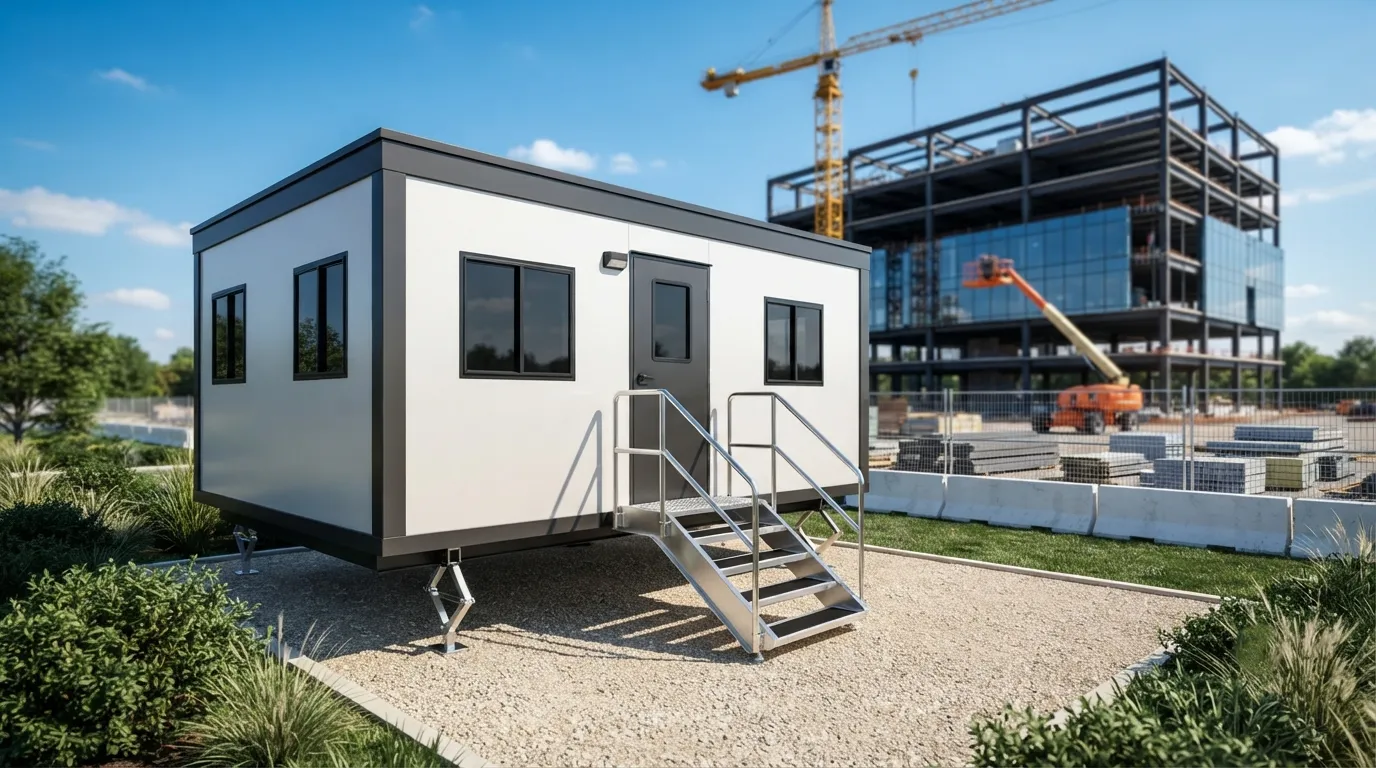
Where should I place handwashing stations on site?
Put them where hands actually get dirty. That means near the toilets, near food or break areas, and near any paint, coating or pesticide operation triggering 1926.51(f)(1). Access matters as much as location. ADA Standards section 403.5.1 requires 36 inches of clear route width to reach the unit, and section 405.2 caps any ramp at a 1:12 slope if the ground is not flat. A gravel lot in Little Rock with a 6-inch curb needs a ramped approach, not a unit dropped at the base of a step. Keep clearance in mind for delivery too. Our trucks need a straight path to set the unit down without dragging it across mud or debris, and OSHA 1926.25 housekeeping rules mean job sites should keep that path clear of scrap once the station is placed. For general placement logic that applies to both toilets and sinks, the porta potty placement guide covers approach angles and ground surface in more detail.
| unit | day | week | month |
|---|---|---|---|
| standard | 100-350 | 130-500 | 125-325 |
| ada | 200-400 | 120-240 | - |
Handwashing stations typically bundle with a toilet order rather than pricing separately, so budget them alongside a standard porta potty rental or an ADA accessible porta potty using the table above. For a broader look at what a full-site setup runs, check porta potty rental cost or the porta potty rental per day breakdown. Crews in Bryant, about 13.7 miles southwest of Little Rock, often combine sink rentals with a construction site services package rather than order line items separately.
Does hand sanitizer count as a handwashing station?
No. 29 CFR 1910.141(d)(2) specifically requires soap and towels or a hand-drying device, and sanitizer gel does not meet that standard where washing facilities are required. Sanitizer works as a supplement between wash breaks, not a replacement. Order a hand sanitizer station rental alongside real sinks, not instead of them.
Do event venues need handwashing stations too?
Usually, yes, especially with food vendors on site. Caterers and food trucks generate the same grease-and-grime handwashing need as a jobsite. Pair units from event restroom rental or festival restroom rental with a sink station near the food area, not just near the toilets.
How often do handwashing stations get serviced?
Most run on the same interval as portable toilets. ANSI/PSAI Z4.3 sets a baseline of one service visit per week for up to 10 users across a 40-hour week; heavier-traffic sites need more frequent visits. See how often are porta potties cleaned for details on refill and pump-out timing.
Can I rent just a handwashing station without toilets?
Yes. Some sites, like a small painting crew triggering 1926.51(f)(1), just need water and soap without a full toilet order. Request a standalone unit through portable sink rental or get a quote through request a quote for your specific headcount.
What is the difference between a handwashing station and a portable sink?
Not much in practice. "Handwashing station" usually describes a simpler foot-pump or gravity-fed unit, while "portable sink" can include hot water and multiple basins. Both need soap and towels under 1910.141(d)(2). Compare options on handwashing station rental before you order.
Next step
Get a delivery date
Tell us the address, the dates and the headcount. We size the order and confirm the route.