
What Does OSHA Require For Portable Toilets On A Construction Site?
The construction standard is OSHA 1926.51(c)(1): 1 toilet facility for 20 workers or fewer, then 1 toilet seat and 1 urinal per 40 workers once you pass 20, and 1 per 50 once the crew hits 200 or more. That is the number inspectors check first. Pair it with OSHA portable toilet requirements planning and a how many porta potties do I need headcount before you order. OSHA 1926.51(a)(1) also requires an adequate supply of potable water at every place of employment, which is why crews often pair toilets with a handwashing station rental or a portable sink rental. General industry sites, as opposed to active construction, fall under 29 CFR 1910.141(c)(1)(i) instead, a separate ratio table. Don't confuse the two standards when you're staffing a warehouse crew alongside a job site trailer from a construction site services package. For standard porta potty rental counts on a mid-size crew, a single porta john rental unit rarely covers more than 20 people for a full week without extra service visits.
How Many Porta Potties Do I Need Under OSHA Rules?
Count your peak crew size, not your average. A 45-person Little Rock framing crew needs at least two units under the 1926.51(c)(1) break past 20 workers, and that math holds whether you're building in downtown Little Rock or out toward Maumelle, 13.4 miles north. Agricultural operations follow a different rule: OSHA 1928.110 requires field sanitation at one facility per 20 hand-labor employees, reachable within a quarter mile walk, which matters for farm and agricultural restrooms work near Bryant, 13.7 miles southwest. ANSI/PSAI Z4.3 sets the baseline service interval at once a week for up to 10 users over a 40 hour week, so a crew of 45 needs more frequent pumping, not just more units. Run the numbers with our porta potty rental cost guide before you commit to a porta potty rental per day rate versus a monthly porta potty rental contract.
| unit | day | week | month |
|---|---|---|---|
| standard | 100-350 | 130-500 | 125-325 |
| ada | 200-400 | 120-240 | - |
| deluxe | 85-1200 | 150-290 | - |
Are There OSHA Portable Toilet Distance Requirements?
OSHA does not publish a fixed distance figure in 1926.51(c), and any specific footage a competitor quotes online should be confirmed with the city rather than assumed. What OSHA does require is accessibility for workers with disabilities, which ties into ADA Standards 213.2: where single-user units are clustered, at least 5 percent, and never fewer than one, must be accessible. That means job sites in Little Rock running a bank of six or more standard units need an ADA accessible porta potty in the mix. ADA Standards 403.5.1 sets a 36 inch minimum clear route to the unit, and 405.2 caps ramp slope at 1:12 if the ground isn't level. Placement in the public right of way, like a sidewalk closure downtown, needs confirming with the city before delivery. For general placement logic beyond ADA, see our porta potty placement guide and check porta potty permit requirements before you finalize a site plan near a public road.
Do OSHA Rules Cover Handwashing And Sanitation Too?
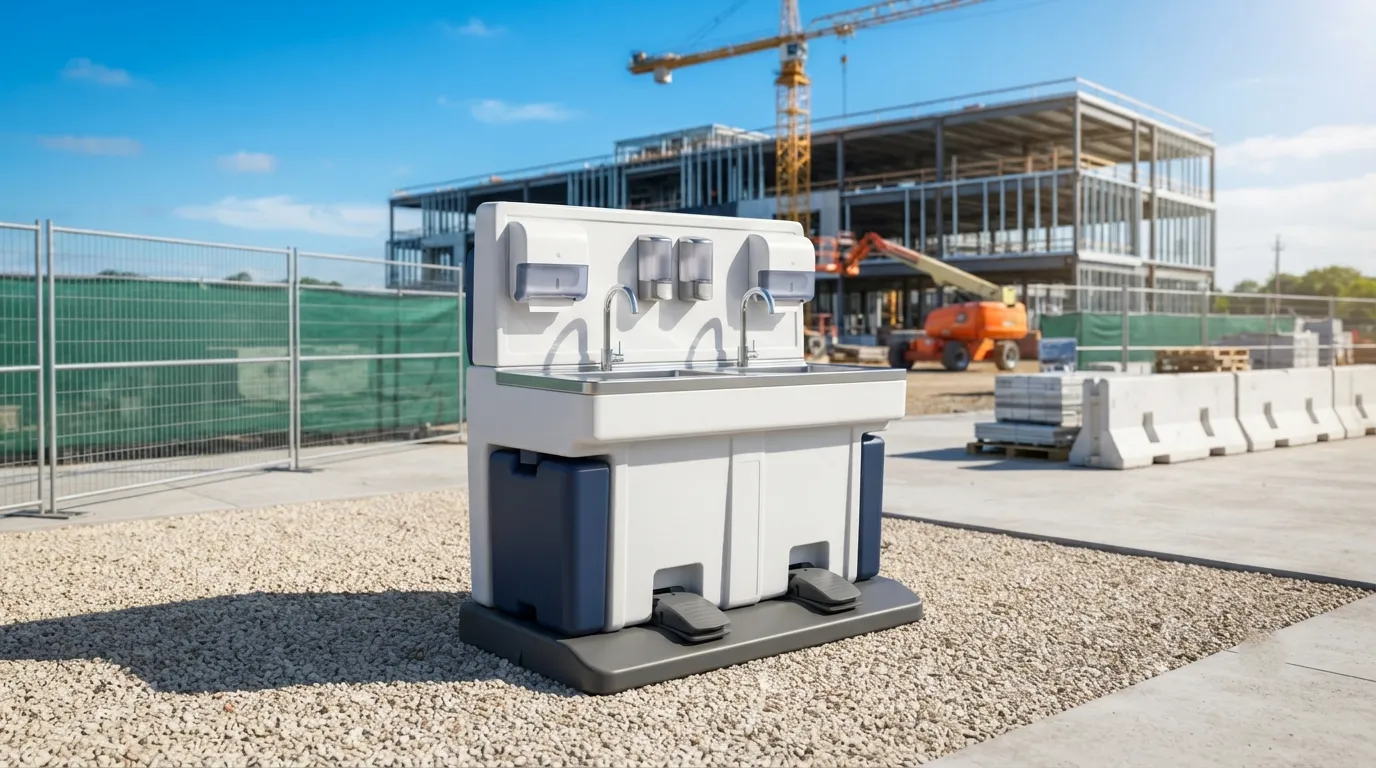
Yes, and it's a separate requirement from toilet counts. 29 CFR 1910.141(d)(2) requires washing facilities stocked with soap and towels or a hand-drying device; hand sanitizer alone does not satisfy it. OSHA 1926.51(f)(1) adds a specific washing requirement when workers apply paints, coatings, herbicides or insecticides, or handle other contaminants, which comes up often on renovation and demolition sites using a home renovation porta potty setup. General housekeeping under OSHA 1926.25 requires clearing debris from work areas, which is where a roll-off dumpster rental or construction dumpster rental earns its keep alongside the toilets. Sites running power tools also fall under OSHA 1926.404(b)(1)(ii) for GFCI protection, worth checking if you're adding a temporary power pole or light tower rental to the same job. For crews needing both a wash station and toilets in one order, bundle a hand sanitizer station rental with your unit count rather than treating sanitation as an afterthought.
Do I need one porta potty per worker on a construction site?
No. OSHA 1926.51(c)(1) sets ratios, not a one-to-one rule: 1 unit covers up to 20 workers, then the ratio shifts to 1 per 40, and again to 1 per 50 at 200-plus workers. A 15-person crew in Little Rock needs just one standard unit under this math.
Does cal OSHA portable toilet requirements differ from federal OSHA?
Cal/OSHA has its own state plan with distance and ratio details that can differ from the federal standard, but that's California-specific and not the rule in Arkansas. Little Rock job sites follow the federal OSHA 1926.51(c) table, not Cal/OSHA.
What happens if I don't meet OSHA toilet ratios?
You risk a citation during a site inspection and possible work stoppage. Beyond compliance, understaffed sanitation slows crews down since workers travel further or wait longer. Ordering the right count from the start, per OSHA portable toilet requirements, avoids both problems.
Do OSHA rules apply to short events, not just construction?
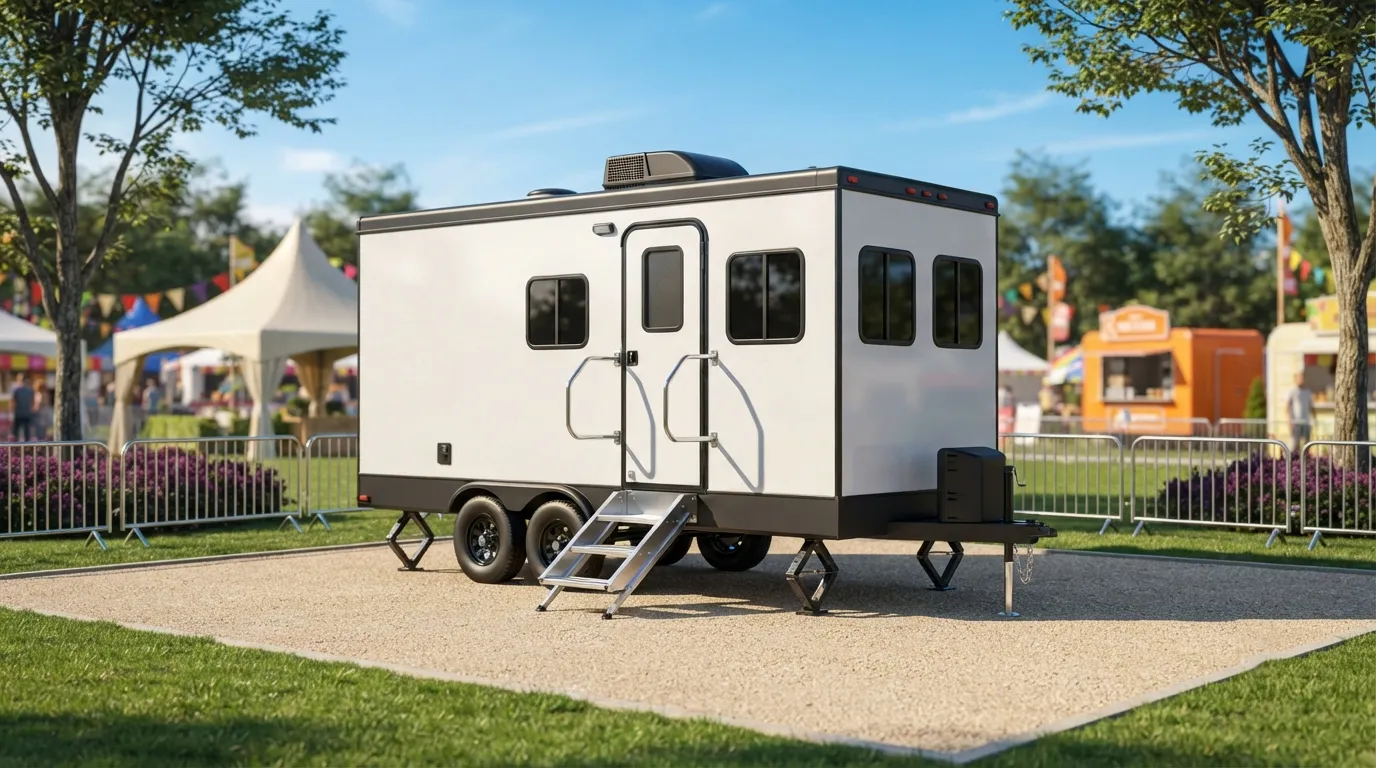
OSHA 1926.51(c) governs construction employers specifically. Events like a wedding restroom rental or festival restroom rental aren't OSHA-regulated the same way, though local permitting and guest-count planning still apply separately.
Can I rent a storage container along with my toilets for one job?
Yes. Many Little Rock contractors pair a storage container rental or mobile office trailer rental with their sanitation order for one delivery window, simplifying logistics on active sites near Sherwood, 18.3 miles northeast.
Next step
Get a delivery date
Tell us the address, the dates and the headcount. We size the order and confirm the route.